How to plan a crypto portfolio for the next cycle in 2026
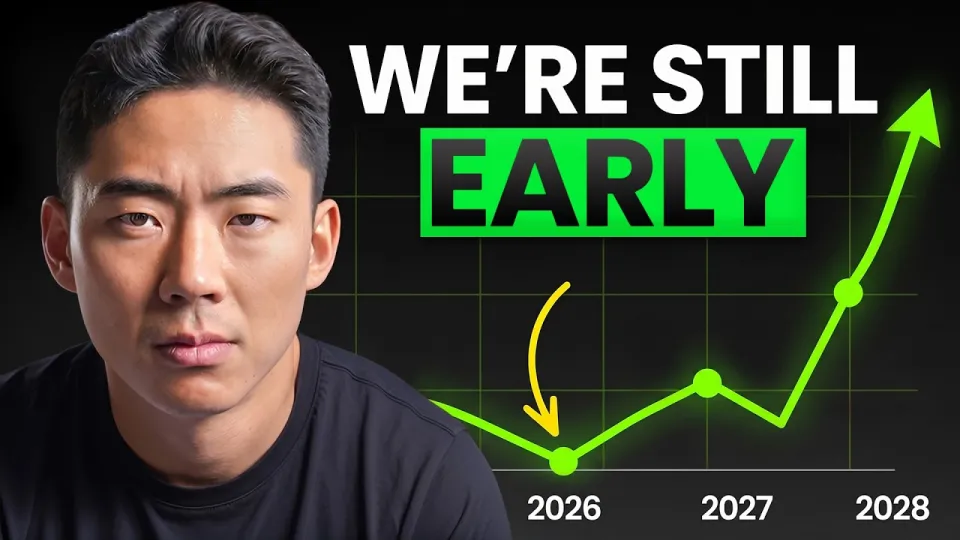
Video: my plan to make millions in crypto 2027
Need articles like this for your video? They help promote it on YouTube and Google — order them in the Telegram bot @sat_sit_bot. Articles with your video embedded are written and posted by the bot itself — on popular topical sites (no ads). Your first 50 articles are free.
· based on the channel Brian Jung
A crypto plan for the next cycle in 2026 works best as a written set of rules rather than a list of coins: decide how much of your net worth goes in, split it between Bitcoin, altcoins and stablecoin reserves, tie each position to a narrative you can explain in one sentence, and define in advance what would make you sell. Brian Jung's breakdown of his own plan for the coming cycle follows that structure, and the Kaizen Pro product page is where he keeps the research and waitlist for his paid community.
Why the crypto bull case still holds in 2026
The core argument for owning crypto in 2026 is that adoption is moving from speculation into infrastructure. Stablecoin legislation in the United States gave dollar-pegged tokens a legal footing, which pushed banks, payment processors and brokerages into issuing or supporting them. Tokenized treasuries and money-market funds now sit on public chains and are used as collateral. Spot Bitcoin and Ethereum ETFs turned crypto into something an adviser can allocate to without touching a private key.
That matters for a portfolio because it changes who the marginal buyer is. In earlier cycles the buyer was another retail trader; now it is a treasury desk, a payments company or a retirement account. Flows from those sources are slower and stickier, which tends to produce longer expansions and sharper corrections when leverage builds up. The bull case is not that prices only go up, it is that the floor under the asset class keeps rising as real revenue and real users arrive.
The narratives driving the next cycle
Four themes keep coming up when professionals describe where the next leg of growth comes from:
- Stablecoin infrastructure. Payment rails, on/off ramps and yield-bearing dollar tokens. Revenue is transaction-based and does not depend on token prices.
- Real-world assets. Tokenized treasuries, private credit and commodities. The pitch is yield plus 24/7 settlement, and the buyers are institutions.
- AI and compute. Tokens tied to decentralized compute, data or agent payments. High volatility, high narrative strength, short track record.
- High-throughput layer-1s. Chains such as Sui and Solana that compete on cheap transactions and consumer apps. These are the beta plays on retail activity returning.
A workable rule is to hold no more than two or three assets per narrative and to be able to name the revenue source or the user for each one. If the only reason to own a token is that it went up last cycle, it is a trade, not an investment.
A step-by-step plan to make millions in crypto
No one can promise millions, but you can build a plan that gives a small account a realistic shot at outsized returns without risking ruin. The sequence matters more than the picks.
- Set the total risk budget. Decide the amount you can lose entirely without changing your life. Fund the position from savings, not from credit.
- Build a core. Bitcoin and Ethereum as the majority of the crypto sleeve, bought on a schedule rather than in one click.
- Add satellite positions. A basket of altcoins tied to the narratives above, sized so that no single one can wipe out the portfolio.
- Keep a stablecoin reserve. Cash on the sidelines is a position; it is what lets you buy a 40% drawdown instead of watching it.
- Write exit rules before entry. Define a price or a condition for taking profit in tranches, and a thesis-invalidation point for selling at a loss.
- Review quarterly. Narratives age fast; a token that made sense two quarters ago may now be a crowded trade.
A widely shared retail version of this is a rough 50/50 split between Bitcoin and altcoins, with the altcoin half spread across a handful of names. That is aggressive, and it only works if the reserve and the exit rules are in place first.
Position sizing and the 50/50 debate
Splitting capital evenly between Bitcoin and altcoins is a bet on risk appetite, not a law. Bitcoin's drawdowns in past cycles have reached 70–80%; large altcoins have fallen 90% or more from their highs. If a 50/50 portfolio would keep you awake, the honest answer is to lower the altcoin share, not to add leverage to make up for it.
A more defensible structure for most people is 60–70% in Bitcoin and Ethereum, 20–30% in a small altcoin basket and 10–20% in stablecoins, rebalanced when a position doubles. Rebalancing is how you actually realise gains; holding through a full cycle and hoping to sell the exact top is how most portfolios round-trip to zero profit.
Common doubts about the cycle
"They said the same thing last cycle and I lost everything." The difference between a plan and a prediction is that a plan includes sizing and exits. Losses in the last cycle came mostly from buying after a large run with borrowed money, not from owning crypto at all.
"Isn't regulatory clarity bad for crypto?" Clarity removes the grey zone that kept institutions out. It may slow down some DeFi experiments, but it brings banks, brokers and payment firms in, and those are the buyers who can move size.
"When is the top?" Nobody knows. Estimates from market participants range from 2027 to 2029, which is exactly why tranche selling beats a single exit price.
"Aren't you always bullish?" Content creators are structurally optimistic, so treat any plan as a template and stress-test it against a 70% drawdown before committing capital.
Risks that matter more than coin selection
Survival is the strategy. The three things that end crypto portfolios are leverage, concentration and custody mistakes. Leverage turns a normal 30% correction into a liquidation. Concentration in one small-cap token means one team failure erases years of gains. Custody errors, from lost keys to exchange failures, are permanent in a way that price drops are not.
On top of that, the macro backdrop still drives crypto more than any single narrative. Liquidity conditions, real interest rates and the dollar all influence how much risk capital is available. A plan that assumes permanently rising prices is not a plan; one that assumes volatility and budgets for it is.
Where to follow the research
All links from the breakdown in one place:
- Kaizen Pro waitlist and product: https://whop.com/kaizen/products/kaizen-pro/
- Free crypto market report newsletter: https://newsletter.kaizen.gg/subscribe
- X: https://twitter.com/thebrianjung
- Instagram: https://www.instagram.com/creditbrian
- Risks and disclaimers document: https://docs.google.com/document/d/1WIgz8SB1mMzke0uvLt_6zXmSbqLL4gL5VgpDnVEk5m8/edit?usp=sharing
Conclusion
The plan that gives a crypto portfolio a chance at life-changing returns in this cycle is boring up close: a written risk budget, a Bitcoin and Ethereum core, a small basket of narrative-driven altcoins, a stablecoin reserve and pre-committed exit rules. Narratives such as stablecoin infrastructure, tokenized real-world assets and AI-linked compute explain where new demand is likely to come from, but sizing and discipline decide whether you keep the gains. Brian Jung's video breakdown is a useful starting template for that structure, provided you adapt it to your own risk tolerance rather than copying the allocations. If you want his ongoing research and the waitlist, start at the Kaizen Pro page.
Key takeaways
- The plan is built around narratives rather than a single coin: stablecoin infrastructure, real-world asset tokenization, AI-linked tokens and high-throughput layer-1s such as Sui.
- A common retail approach is splitting capital roughly 50/50 between Bitcoin and altcoins, with stablecoin reserves held for drawdowns.
- Regulatory clarity, including stablecoin legislation in the US, is treated as a structural tailwind rather than a threat to crypto.
- Most losses in past cycles came from buying late with leverage, not from picking the wrong asset class.
- Cycle timing is uncertain: credible viewers expect a top anywhere from 2027 to 2029, so plans must survive being early or late.
Source: my plan to make millions in crypto 2027 · Markdown version
Questions & answers
How much of a crypto portfolio should be in altcoins?
There is no universal number, but a common retail split is roughly 50% Bitcoin and 50% altcoins, while more conservative structures keep 60–70% in Bitcoin and Ethereum with 20–30% in a small altcoin basket. The right share is the one you can hold through a 90% altcoin drawdown without panic selling.
When will the crypto cycle top arrive?
Nobody knows, and credible estimates range from 2027 to 2029. Because timing is uncertain, selling in tranches at pre-set levels and rebalancing after large gains is more reliable than picking a single exit price.
Is regulatory clarity good or bad for crypto prices?
It is generally constructive. Clear rules on stablecoins and securities bring banks, brokers and payment companies into the market, which expands the buyer base. The trade-off is that some unregulated DeFi activity may be curtailed.
Why do so many people lose money in crypto bull markets?
Most losses come from behaviour rather than asset selection: buying after a large run, using leverage, concentrating in one small token and holding through the entire cycle without taking profit. A written risk budget and exit rules address each of those failure points.